Key Takeaways
- SAIF Zone, established in 1995, was the first free zone inside a UAE international airport and the world’s first ISO 9001 certified free zone. It now hosts 8,000+ companies from 160 countries (Sharjah Airport International Free Zone Authority).
- Sitting directly adjacent to Sharjah International Airport gives aviation tenants airside access, aircraft can move between apron and hangar without off-airport transit, a real operational advantage that a standard industrial free zone can’t offer.
- 100% foreign ownership, 100% repatriation of profits, and full tax exemption make it a practical base for aviation-support businesses, not just a symbolic “aviation zone” label.
- Dolphin Air FZE, part of Abdulla Bin Zayed Investment Group, has operated a base-maintenance and storage facility inside the SAIF Zone aviation cluster since 1996, one of the longer continuous aviation tenancies in the zone.
Most free zones in the UAE compete on the same handful of selling points: tax exemption, full foreign ownership, fast setup. SAIF Zone has all three, but for an aviation MRO business specifically, none of them are the actual draw. The draw is that the zone sits inside the airport perimeter itself, which changes what’s operationally possible for a company that moves aircraft for a living.
This piece looks at what makes SAIF Zone specifically suited to aviation maintenance, storage, and support businesses, not just free zones in general, using one of the zone’s own long-running aviation tenants as a concrete example.
What Is SAIF Zone, and Why Does Location Matter for MRO?
Sharjah Airport International Free Zone (SAIF Zone) was established in 1995 as the first free zone area located within an international airport in the UAE, and the world’s first ISO 9001 certified free zone (Sharjah Airport International Free Zone Authority). For most businesses, being inside an airport perimeter is a convenience. For an aircraft maintenance or storage operator, it’s closer to a requirement.
A hangar or workshop with direct airside access means an aircraft can taxi straight from the runway to a covered facility without leaving the airport, no public-road transit, no separate customs clearance for the aircraft itself, no added handling risk each time it moves. A facility located outside the airport perimeter, even a short drive away, adds a transit step every single time an aircraft goes in or out, which adds up fast for a business handling based and transient aircraft regularly.
The Free Zone Advantages That Matter for Aviation Businesses
Beyond location, SAIF Zone’s standard free-zone terms apply: 100% foreign ownership, 100% repatriation of capital and profits, and full tax exemption on corporate and personal income (Sharjah Airport International Free Zone Authority). Combined with a location roughly 20 minutes from Dubai International Airport, that puts an aviation business inside SAIF Zone within reach of both emirates’ operators without relocating a physical presence.
SAIF Zone’s own published structure includes a dedicated aviation cluster covering aircraft leasing, aviation training, aviation support services, and MRO activity specifically, alongside its broader logistics, manufacturing, and media zones. That’s a meaningfully different setup from a general-purpose free zone that happens to be near an airport.
A Real Example: Dolphin Air’s Nearly 30 Years in the SAIF Zone Aviation Cluster
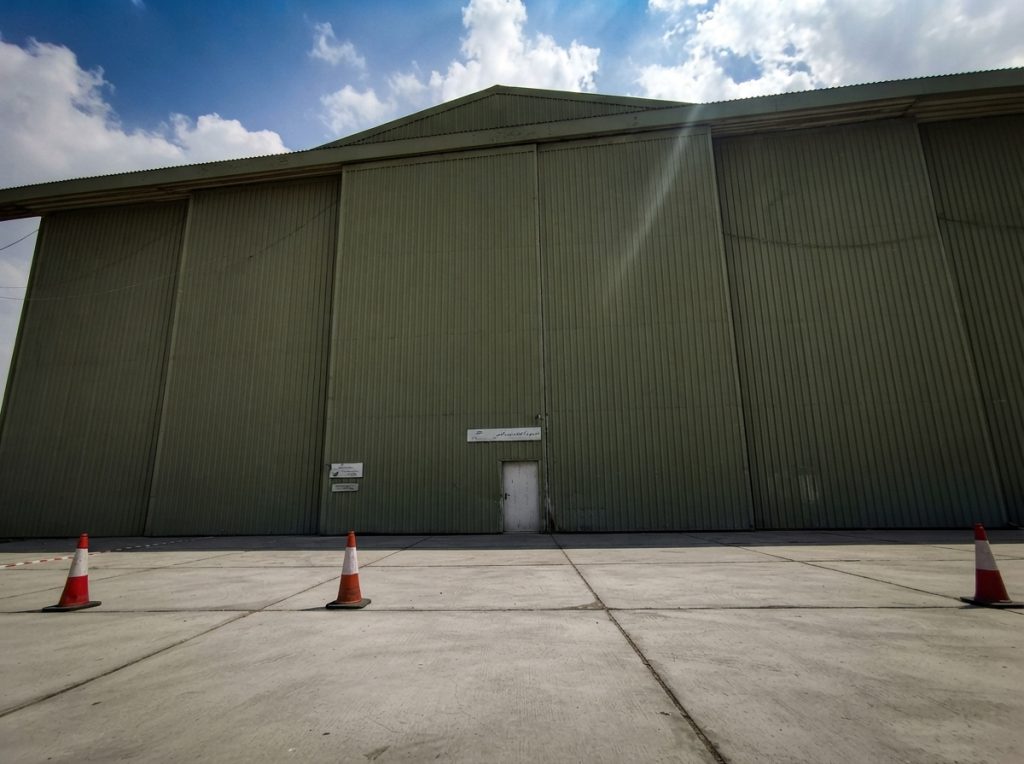
Dolphin Air FZE, part of Abdulla Bin Zayed Investment Group, has operated inside the SAIF Zone aviation cluster since 1996, running its base maintenance, storage, and refinishing operation from U Building at Sharjah International Airport with direct airside access. That’s close to thirty years of continuous operation through several distinct phases of the region’s aviation growth, a genuine long-tenure example rather than a recent arrival.
Is SAIF Zone Right for Every Aviation Business?
Not automatically. The airside, free-zone model suits ground-based aviation services well, storage, base maintenance, refinishing, leasing, and training, where being physically inside the airport perimeter changes day-to-day operations. An airline running scheduled routes has a different set of requirements entirely, and the aviation cluster’s value is specifically in supporting the aircraft on the ground, not in replacing an airline’s own operational base. For MRO, leasing, and aviation support businesses specifically, though, the combination of airside access and standard free-zone terms is hard to replicate outside an airport-based zone.
The practical test is simple: does the business need to physically move an aircraft as part of its daily operations? If so, every kilometer between the facility and the runway is friction that a SAIF Zone tenant doesn’t carry. If not, the zone’s tax and ownership terms still apply, but they’re competing against other UAE free zones on the same basis as any other business.
Explore Aviation Solutions Within the ABZI Group
Aviation Solutions is part of Abdulla Bin Zayed Investment Group’s aviation portfolio, alongside Dolphin Air’s SAIF Zone operation. Learn more about the group behind both companies.
Frequently Asked Questions
What is SAIF Zone?
SAIF Zone (Sharjah Airport International Free Zone) is a free zone established in 1995 inside Sharjah International Airport, the first free zone located within a UAE international airport and the world’s first ISO 9001 certified free zone.
Is SAIF Zone only for aviation companies?
No. SAIF Zone covers multiple sectors including logistics, manufacturing, and media, alongside a dedicated aviation cluster covering leasing, training, support services, and MRO activity.
How close is SAIF Zone to Dubai?
SAIF Zone is located adjacent to Sharjah International Airport, roughly a 20-minute drive from Dubai International Airport.
Does an ABZI company operate in SAIF Zone?
Yes. Dolphin Air FZE, part of Abdulla Bin Zayed Investment Group, has operated a base maintenance, storage, and refinishing facility inside the SAIF Zone aviation cluster since 1996.