Key Takeaways
- The UAE economy grew 6.2% to AED 1.9 trillion in 2025, with non-oil GDP up 6.8%. By Q1 2026 non-oil sectors made up 79.4% of GDP.
- The fastest-growing sectors in 2025 were construction (11.1%), finance and insurance (10.4%), real estate (7.9%) and transport and storage (7.8%).
- Non-oil exports reached a record AED 452.8 billion in the first half of 2026, up 23.9%.
- Opportunities differ in kind: demand-led (aviation, tourism, e-commerce), compliance-led (gas, calibration, landscaping) and cycle-sensitive (property).
- Before choosing a sector, check the licensed activity, foreign-ownership rules and corporate tax, which is 9% above AED 375,000 of taxable income.
“Business opportunities in the UAE” is too broad a question to act on. This guide goes sector by sector: each entry gives sourced data, where the practical opening sits, and an example operator. The examples are ABZI’s own companies. The group has operated in the UAE since 1990 and runs eight businesses, but they illustrate each sector rather than limit your options.
Is the UAE Economy Still Growing in 2026?
Yes, with a shift in mix. GDP grew 6.2% in 2025 to AED 1.9 trillion, and non-oil GDP grew 6.8% to AED 1.5 trillion (Gulf News, 30 May 2026, citing the Federal Competitiveness and Statistics Centre). Trade, finance, construction and manufacturing are the largest non-oil sectors, at 16.9%, 13.2%, 12.9% and 12.8% of non-oil GDP respectively. Growth slowed to 3% in Q1 2026, while the non-oil share rose to 79.4% (Gulf News, 4 August 2026). Non-oil exports hit AED 452.8 billion in H1 2026 (Gulf News).
1. Real Estate and Property Investment
Dubai recorded more than 270,000 property transactions worth AED 917 billion in 2025 (Dubai Media Office), the investor base grew 24% to about 193,100, and January to September 2026 added AED 574 billion (Emirates 24|7). The opening is real but cycle-sensitive: prices and rents eased in 2026, so entry price, supply and handover dates matter. Al Hamar Real Estate works across residential, commercial and investment property. For depth, see why invest in Dubai real estate, commercial property investment and retail property investment.
2. Aviation, MRO and Aviation Fuel
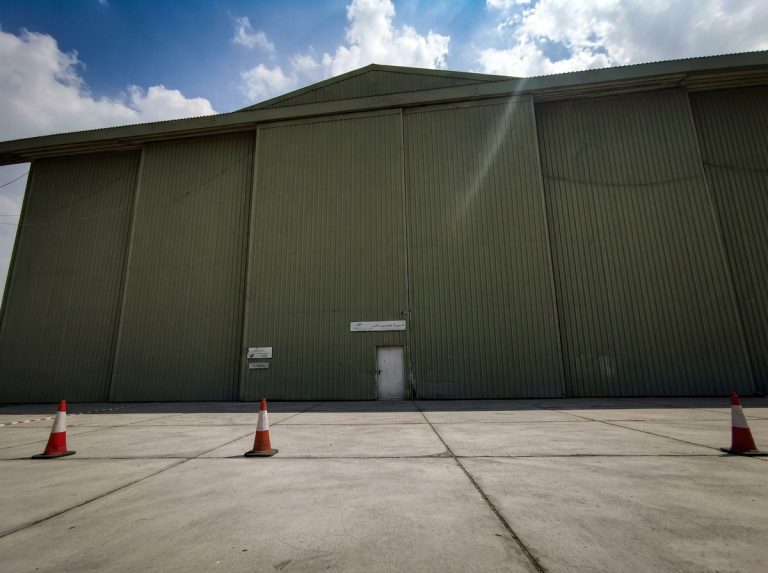
Dubai International handled a record 95.2 million passengers in 2025, up 3.1%, and forecasts about 99.5 million in 2026 (Gulf News, 11 February 2026). Transport and storage grew 7.8% in 2025. Aircraft on the ground cost operators money, so maintenance, spares and fuel supply are demand-led niches, and the openings sit with operators that can cut turnaround time and answer around the clock. Sharjah’s SAIF Zone, established in 1995, was the first UAE free zone inside an international airport (SAIF Zone). Dolphin Air provides aircraft MRO and engineering, and Aviation Solutions supplies Jet A-1 fuel. See why SAIF Zone suits aviation MRO.
3. Industrial and Engineering Services
Manufacturing is 12.8% of non-oil GDP, and the UAE’s Operation 300bn strategy targets lifting the industrial sector’s GDP contribution from AED 133 billion to AED 300 billion by 2031 (UAE Government, u.ae). The Emirates Development Bank allocated AED 30 billion over five years to support it, with a target to finance 13,500 small and medium enterprises. More plants and processes mean more demand for the services that keep them compliant, such as ISO 17025 calibration and testing. That is a compliance-led niche where accreditation, not price alone, wins work. Al Saqr Engineering offers calibration and engineering testing from Sharjah.
4. Energy and Gas
Clean energy supplied 32.4% of UAE electricity in 2025, against a 35% target for 2031, and renewable capacity rose from 129 MW in 2015 to 8.2 GW in 2025 (Gulf News, 31 August 2026, citing the Ministry of Energy and Infrastructure). Gas also remains a regulated building utility: Abu Dhabi’s Decision No. 14/2025 requires licensed firms for gas systems, periodic inspection and maintenance in residential and commercial buildings, including free zones (Department of Energy, May 2025). Compliance rules favour certified providers. Al Saqr Gas supplies bulk LPG and designs, installs and operates central gas systems.
5. E-Commerce and Electronics Retail
UAE e-commerce reached AED 42.2 billion in 2025, up from AED 17.6 billion in 2020, and is forecast to reach AED 67.2 billion by 2030. It made up 15.7% of retail sales in 2025 (EZDubai and Euromonitor International, September 2026). Growth is slowing from its 19% annual pace to a forecast 9.9%, so trust, delivery reliability and genuine stock are what separate sellers. ABZ Electronics sells genuine consumer electronics online to individuals and businesses. Our guide on going digital with e-commerce covers the basics.
6. Tourism and Experiences
Dubai welcomed a record 19.59 million international overnight visitors in 2025, with average hotel occupancy of 80.7% (Gulf News, 2026, citing Dubai’s Department of Economy and Tourism). Visitors spend beyond hotels, which opens room for experience operators with strong safety records. Weather, permits and flight safety are the main constraints, so operational discipline matters more than marketing. MAHA Balloon Adventures runs sunrise hot air balloon flights over the Dubai desert.
7. Landscaping and Green Infrastructure
Dubai Municipality’s Greenery and Landscaping Strategy sets out how the 2040 Urban Master Plan will expand parks and green spaces. Its Greenery and Plantation Manual (2026) states that the plan supports planting 2.2 million new trees across Dubai by 2040 and stresses native and drought-tolerant species to cut water use. The manual covers parks, waterfronts, green corridors and road verges. That points to demand for designers and maintainers who can deliver climate-suited planting, irrigation and hardscape. Al Bazi Landscaping & Swimming Pools handles villa gardens, pools and commercial landscaping.
How Do These Sectors Compare?
The seven sectors fall into three groups, and the group tells you what kind of barrier you’ll face.
- Demand-led (aviation, tourism, e-commerce): volumes are at or near records, so the barrier is capacity, reliability and customer trust.
- Compliance- or policy-led (gas, engineering and calibration, landscaping): rules, standards and government plans create the work, so the barrier is accreditation, licensing and technical credibility.
- Cycle-sensitive (property): returns depend on timing and entry price, and 2026 data shows a cooler market than 2025.
Finance and insurance also grew 10.4% in 2025 but sits outside ABZI’s operating areas, so it isn’t profiled here. The figures above are national or emirate-level. Your own case will depend on location, licence, competition and how much capital you can commit.
How Do You Set Up to Pursue These Opportunities?
Start with the licensed activity, then decide between mainland and a free zone. Most mainland activities allow 100% foreign ownership, and free zones do too, though a Cabinet-defined list of strategic activities can require national participation. Corporate tax is 0% on taxable income up to AED 375,000 and 9% above it, and qualifying free zone companies pay 0% only on qualifying income (UAE Government, u.ae). Our step-by-step guide to opening a business in the UAE walks through licensing, structure and tax registration.
Frequently Asked Questions
Which sector offers the best business opportunity in the UAE?
None wins on every measure. Demand-led sectors such as aviation, tourism and e-commerce reward operators with capacity and reliability. Compliance-led sectors such as gas and calibration reward certified providers. Property is cycle-sensitive after a cooler 2026. Match the sector to your capital, licence and time horizon.
Can a foreigner own 100% of a UAE business?
For most activities, yes, on the mainland and in free zones. Activities the Cabinet classes as strategic can require national participation, so confirm your activity code with the licensing authority before committing.
Is doing business in the UAE tax-free?
No. There is no personal income tax, but corporate tax applies at 9% above AED 375,000 of taxable income, and VAT registration thresholds apply. Free zone companies must register for corporate tax even when they qualify for the 0% rate.
Should I choose a free zone or the mainland for these sectors?
It depends on who you serve. A free zone suits a business serving clients outside the UAE, and sector-specific zones such as SAIF Zone suit airport-based aviation work. A business selling mainly to UAE customers generally needs a mainland licence or a free zone licence with mainland permission. Confirm the licensed activity first.
Explore the Sectors Further
If one of these sectors fits your plans, the companies above are a starting point: Dolphin Air and Aviation Solutions in aviation, Al Saqr Engineering in engineering, Al Saqr Gas in energy, Al Hamar Real Estate in property, Al Bazi in landscaping, ABZ Electronics in retail and MAHA Balloon Adventures in tourism. This guide is general information, not financial, legal or tax advice, and the figures change.